
Our Team

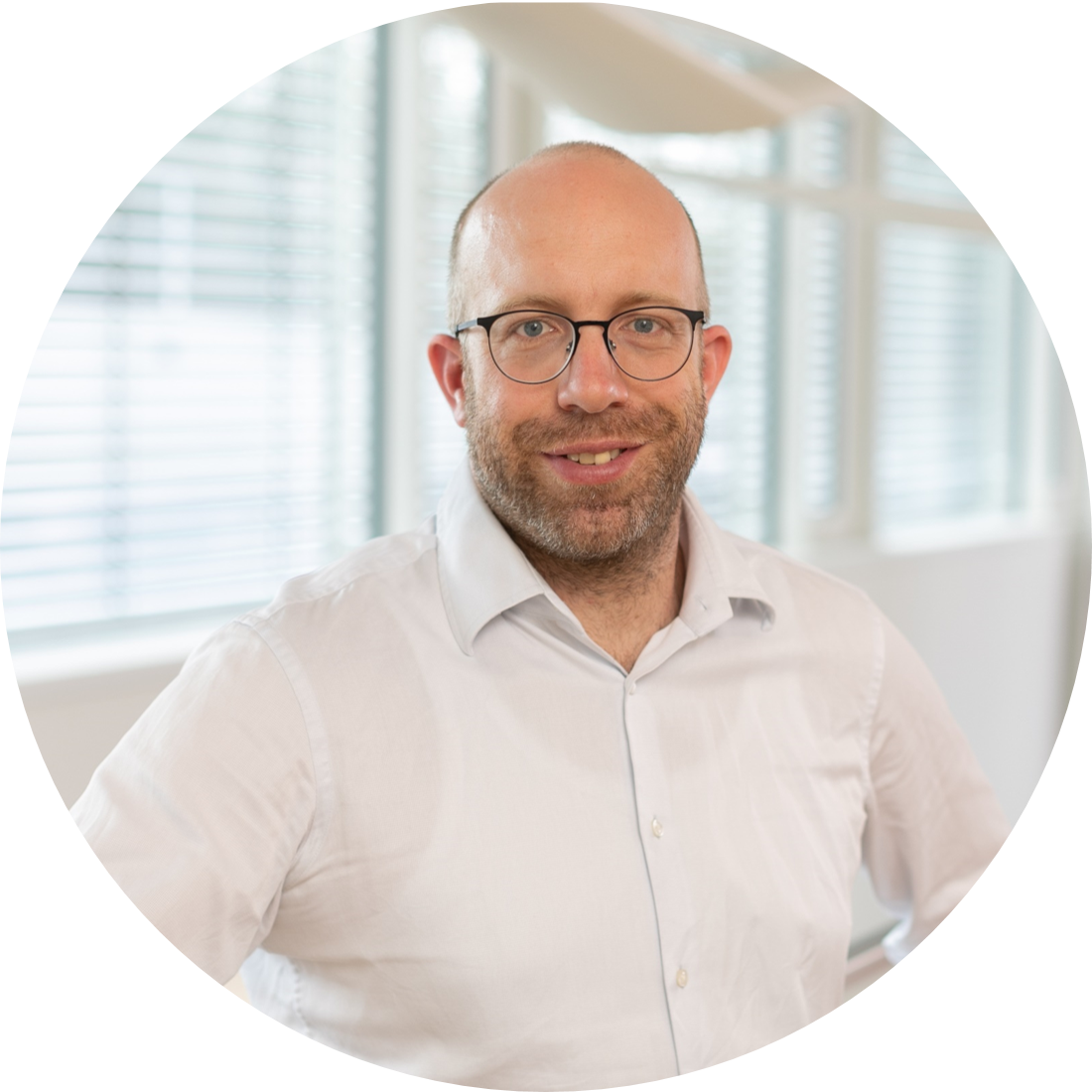
Prof. Dr. Peter Loskill

Head of the 3R-Center Tübingen, Professor for Organ-on-Chip Systems between the NMI Natural and Medical Sciences Institute at the University of Tübingen in Reutlingen and the Faculty of Medicine of the Eberhard Karl’s University Tübingen, Research Group Leader at the NMI

Peter Loskill received his PhD in physics from Saarland University in 2012 and subsequently conducted his postdoctoral research at UC Berkeley. In 2015, he was recognized by Technology Review as one of the “Innovators under 35 Germany” and was selected for the Fraunhofer ATTRACT funding program.

In 2016, he founded the µOrganoLab, whose interdisciplinary research combines approaches from engineering, biology, physics, and medicine to develop novel microphysiological tissue models that recapitulate complex human biology in vitro and can be applied to address scientific, toxicological, or pharmaceutical questions, among others.

In May 2021, he was appointed as fullkl professor for Organ-on-Chip systems between the NMI Natural and Medical Sciences Institute at the University of Tübingen in Reutlingen and the Medical Faculty of Eberhard Karl’s University Tübingen. Simultaneously, he assumed the leadership of the 3R-Center Tübingen and the Organ-on-Chip group at NMI.
Since the founding of the European-Organ-on-Chip-Society (EUROoCS) in 2018, he has served as Vice President of EUROoCS and, from 2021 to 2023, as its President. Between 2018 and 2023, he also coordinated the Marie Skłodowska-Curie Innovative Training Network for the advancement of organ-on-a-chip technology in Europe (MSC-ITN-EUROoC), funded under the European Union’s Horizon 2020 Research and Innovation Programme. Since 2021, overall coordination of the network has been carried out by the 3R-Center Tübingen.

Effective January 1, 2024, he was appointed by the Deutsche Forschungsgemeinschaft (DFG) as an expert in organ-on-chip systems to the Permanent Senate Commission on Animal Research (SKTF). In this role, he has since supported the commission with his expertise in alternative and complementary methods to animal experimentation.

Dr. Pauline Jeckel-Maier

Head of the 3R-Center Tübingen Business Unit

Pauline studied Life Sciences at the University of Heidelberg. She then pursued a Master’s degree in neurobiology at the University of Tübingen. In 2018, Pauline started her PhD in the field of molecular neurobiology at the NMI in Reutlingen. Her doctoral thesis focused on the receptor tyrosine kinase Met as an autism spectrum disorder risk factor, which regulates the organisation of inhibitory synapses through mTOR activation.
Alongside her scientific research, Pauline has always enjoyed making complex scientific concepts accessible to the general public.

This passion led her to join the press and public relations department at NMI shortly after completing her PhD, where she combined her scientific knowledge with journalism.

Pauline gained experience in marketing through the ‘THE LÄND‘ campaign for the state of Baden-Württemberg, as well as in corporate communications within an industrial setting.

In 2025 she joined as PostDoc in the the 3R-Center for In Vitro Models and Animal Testing Alternatives.

Dr. Hanna Vuorenpää

PostDoc

Hanna was majoring in genetics in her Masters studies in University of Oulu, Finland. She moved to Tampere University to do her MSc thesis and continued as a PhD researcher in the Finnish Centre for Alternative Methods.

As a PhD researcher, she worked in a GLP (Good Laboratory Practise) laboratory and participated to validation of a vascular model. Additionally, she was a visiting scientist in EU Reference Laboratory for alternatives to animal testing (EURL ECVAM, Ispra, Italy) in autumn 2015. Hanna received her PhD degree in cell biology in 2016 focusing on development of cardiovascular in vitro models. After her PhD, Hanna worked for a while in pharmaceutical and in bioscience companies in Finland.

In 2018-2025, she worked as a Post doctoral Research Fellow and as vice-PI of Prof. Susanna Miettinen in the Centre of Excellence in Body-on-Chip Research in Tampere University, Finland. The consortium, composed of six research groups with expertise in cell biology, nano- and microtechnology, imaging and biomaterials, focused on developing complex Organ-on-Chip platforms.

Hanna joined µOrganoLab in August 2025 as a Postdoctoral fellow focusing on pre-validation and training of Organ-on-Chips in an EU project. She works closely with project stakeholders such as pharmaceutical companies to boost the industrial use Organ-on-Chips as Novel Approach Methodologies (NAMs).

Dr. Fulya Ersoy

PostDoc

Fulya received her bachelor’s degree in Bioengineering from Ege University, where she developed an early interest in biomedical technologies. During this time, she spent six months as a visiting scholar at the University of Connecticut, gaining hands-on experience in microfluidics and lab-on-a-chip systems.

After returning to Turkey, she worked as a research scholar at Ege University, focusing on 3D imaging of spinal cord injuries. She completed her master’s degree in Biomedical Sciences in May 2018, with a thesis on 3D compartmentalized co-culturing using UV lithography. In the same year, she was awarded a prestigious Ph.D. scholarship by the Turkish Ministry of Education. 

Driven by her strong interest in neuroscience and microfluidic systems, she pursued her doctoral studies at the NMI Natural and Medical Sciences Institute, affiliated with the University of Tübingen. She joined the MicroOrgano Lab in June 2021, where her research focused on the development and fabrication of 3D neuro-microphysiological systems for disease modeling.

Following her Ph.D., Fulya now works as a postdoctoral researcher, where she supports the 3R-Center and plays a key role in the STEP4NAMs project. In addition to her scientific contributions, she takes on a wide range of organizational and coordination responsibilities.

Marlene Fritsch

Staff Scientist

Marlene studied Biomedical Sciences at the University of Reutlingen. During her studies, she focused on biomaterials and their interaction with the immune system. Her interest in immunology led her to pursue a Master’s degree in Molecular Cell Biology and Immunology at the University of Tübingen.

In 2024, Marlene started as an intern in the µOrganoLab and continued as a master student. She completed her thesis on tissue engineering a Liver-on-Chip model for mechanistic hepatotoxicity studies. In September 2025, she joined the 3R-Center Tübingen as part of the STEP4NAMs project to promote and accelerate the adoption of Novel Approach Methodologies (NAMs) in biomedical research.

Lisa Ickert

Assistant to the Head of the 3R-Center Tübingen

After completing her training as a medical-technical assistant for functional diagnostics in Heidelberg, Lisa Ickert dedicated 14 years to serving as the head of lung function at the University Hospital Tübingen.

In October 2023, she moved to the 3R-Center Tübingen, where she has been supporting the team as an assistant to the business unit.

Become part of the Network!

Do you have questions about the 3R-Center Tübingen or the 3R-Network Baden-Württemberg?

Dr. Pauline Jeckel-Maier

+49 7071 29-73667
3rcenter@uni-tuebingen.de